
Industry briefing
This industry briefing covers brand-safe public reporting from 17–20 May 2026 across regulation, rider education, community discussion, a charity ride in the wider unicycle category, and travel battery rules. For electric unicycle (EUC) owners, the through-line is unchanged: verify how your city classifies personal mobility devices, then match your device and riding habits to local requirements.
Europe: Cyprus age rules and Spain’s R-118 restrictions
Cyprus raises minimum e-scooter age to 17
New legislation for personal mobility devices, including e-scooters, took effect in Cyprus, setting the minimum riding age at 17 and tightening operating expectations. English-language reporting describes the rules as now enforceable nationwide.
- Rules in force (reported 19 May 2026): Cyprus Mail — E-scooter age limit rise to 17 goes into force
- Summary (reported 19 May 2026): KNEWS — Cyprus sets minimum e-scooter age at 17
Spain: R-118 signage for no-ride zones
Reporting from Spain highlights the R-118 traffic sign, which lets municipalities mark areas where e-scooters and similar personal mobility vehicles may be prohibited, including pedestrian zones and historic centres. Riders should follow posted restrictions and official DGT guidance rather than social summaries alone.
- R-118 sign context (reported 17 May 2026): Andalucía Informa — DGT R-118 sign and urban mobility restrictions
- Broader compliance context (published 18 May 2026): Spain Buddy — Spain’s scooter crackdown 2026
United Kingdom: post-consultation changes for two-wheel rules
UK coverage in this window follows the close of a government consultation on licensing and training for scooters, mopeds, and related two-wheel categories. Several outlets note that a dedicated e-scooter consultation could follow, which matters for how cities and riders think about throttle personal electric vehicles more broadly.
- Proposed rule changes (reported 19 May 2026): Birmingham Live — Scooters, mopeds and e-bikes face proposed rule changes
Americas: state and county ordinances
Florida: Orange County drafts e-bike and e-scooter rules
Orange County officials are discussing new requirements for e-bikes and e-scooters, including helmet use, education measures, and accountability pathways for guardians when minors ride unsafely. Reporting indicates commissioners want rules in place before the new school year. Riders should rely on the published ordinance text when it is finalized.
- Proposed rules and timing (reported 19 May 2026): Orlando Sentinel — Orange County considering rules for e-bikes and e-scooters
- Policy discussion (reported 19 May 2026): Florida Politics — Parents could be ticketed for dangerous e-scooter riding in Orange County
Iowa and California: sidewalks, trails, and speed focus
In Iowa, several cities are updating ordinances as e-bikes, e-scooters, and electric motorcycles appear on trails and sidewalks. Ankeny’s updated rules, for example, restrict certain vehicles on sidewalks and shared paths while capping some low-speed classes at 20 mph. Separately, Sacramento County rangers report increased enforcement attention to speeding e-bikes on the American River Parkway.
- Iowa municipal updates (reported 19 May 2026): Radio Iowa — Iowa cities respond to influx of electric bikes and scooters
- Sacramento County trail enforcement (reported 19 May 2026): KCRA — Sacramento County Rangers eye speeding e-bikes
Events and rider education
Policy headlines often move faster than public training. This window still includes constructive education stories that help riders understand equipment classes and safe riding expectations.
- Huntington Beach e-bike safety symposium (reported 19 May 2026): Los Angeles Times — Huntington Beach Police hosts e-bike safety symposium
- Penticton e-scooter safety awareness with schools (reported 19 May 2026): Castanet — Penticton RCMP and SD67 promote e-scooter safety awareness
Activity preview, not completed news: USA EUC lists Seek n Shred ShredFest 6 for 28–31 May 2026 at Blue Mountain Event Center in Northern California, with EUC racing and festival programming. USA EUC — Seek n Shred EUC Racing and Onewheel Festival (event 28–31 May 2026).
Charity and human-interest riding
Scottish coverage describes engineer Will Homer preparing a 215-mile coast-to-coast charity ride on a pedal unicycle—not an electric unicycle. The story still shows public curiosity about compact one-wheel mobility, but it should not be read as an EUC product or regulation headline.
- Charity challenge preparation (reported 19 May 2026): The Scotsman — 215-mile unicycle charity challenge
- Route context (reported 19 May 2026): Aberdeen Live — Charity ride to Aberdeen on one wheel
No comparable electric unicycle commuting or EUC charity story appeared in major English outlets during this three-day window.
Standards, batteries, and travel technology
Technical news relevant to PEV owners in this window focuses on how lithium batteries are carried on aircraft—not on new EUC firmware releases. This section stays educational; it does not use fire statistics as a scare headline.
- AirAsia carry-on battery rules on select routes (reported 19 May 2026): Travel And Tour World — AirAsia lithium battery rules for Manila–Kuala Lumpur flights
Before flying with a personal electric vehicle or spare pack, confirm airline limits, carry-on watt-hour caps, and whether the device should travel in the cabin. Use factory-intended chargers and batteries at home regardless of travel plans.
Electric unicycles in this news window
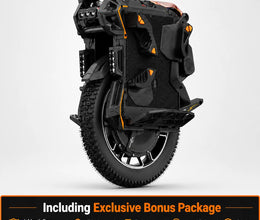
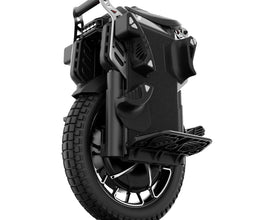
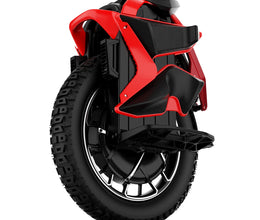
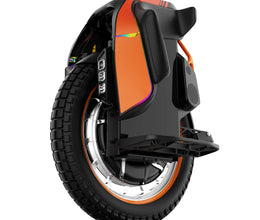
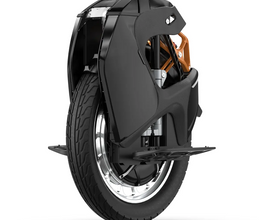
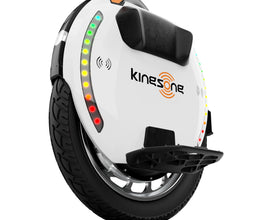
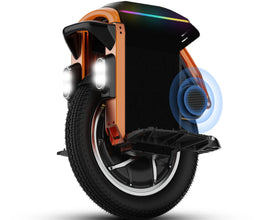
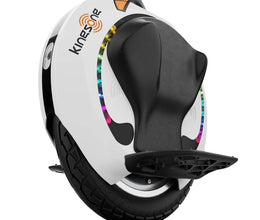
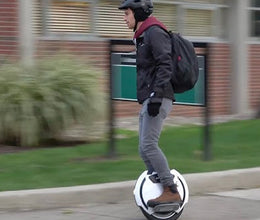
Indexed news in 17–20 May 2026 was still led by e-scooter and e-bike policy, plus municipal education programs. Sanctioned electric unicycle racing continues through organizers such as USA EUC, but this brief treats those items as category context—with one upcoming festival preview—not as product news from Kingsong. When scooter laws add age limits, signage, or insurance steps, EUC riders should check whether the same definitions apply to self-balancing devices in their city.
Community pulse: what EUC riders are discussing
Community discussion observed on 20 May 2026 in the Electric Unicycle Forum activity stream continues to focus on local classification, insurance expectations, safe charging, and whether speed or weight should decide path access. This is rider observation, not an official regulatory source.
- Classification: how cities map EUCs to scooter or broader PEV classes.
- Battery confidence: chargers, pack documentation, and travel prep.
- Commuter fit: range, portability, and mixed-mode trips.
What this means for riders
- Confirm local age, helmet, and path rules before lending a device to younger riders.
- In Spain and similar markets, watch for R-118 or equivalent no-ride signage.
- Match device class (e-scooter, e-bike, EUC) to the ordinance that actually applies.
- Use certified charging equipment and factory-intended batteries.
- Check airline battery rules before international travel with spare packs.
Common rider questions
Are electric unicycles regulated like e-scooters?
Not always. Some laws name e-scooters directly; others use broader terms such as personal mobility device or personal electric vehicle. Check the legal definition where you ride, not only the product marketing category.
Why are counties adding helmet and education rules now?
Local governments are responding to higher micromobility use on sidewalks and trails. Even when the headline device is an e-scooter or e-bike, the same councils may later clarify rules for other compact PEVs, including electric unicycles.
Do airline battery rules affect EUC travel?
They can. Airlines set limits on spare lithium batteries and where packs must be carried. Review the carrier’s published rules before packing a wheel or spare battery for flight.
Choose hardware with compliance in mind
Regulations vary by city, but a reliable PEV decision starts with clear specifications, responsible charging, and support from a focused mobility brand.
Disclaimer
This briefing summarizes publicly reported policy directions, education programs, and organizer announcements. It is not legal advice. Laws change by city and country; riders must follow the rules in force where they ride. For product information and regional support, visit https://www.kingsong.com.
Kingsong focuses on engineered personal electric mobility. When regulations evolve, the hardware priority stays constant: predictable performance, thoughtful thermal design, and rider respect for local compliance.


